Cannabis Before and During a Psychedelic Trip : Timing, Dosage and What Experienced Users Actually Do
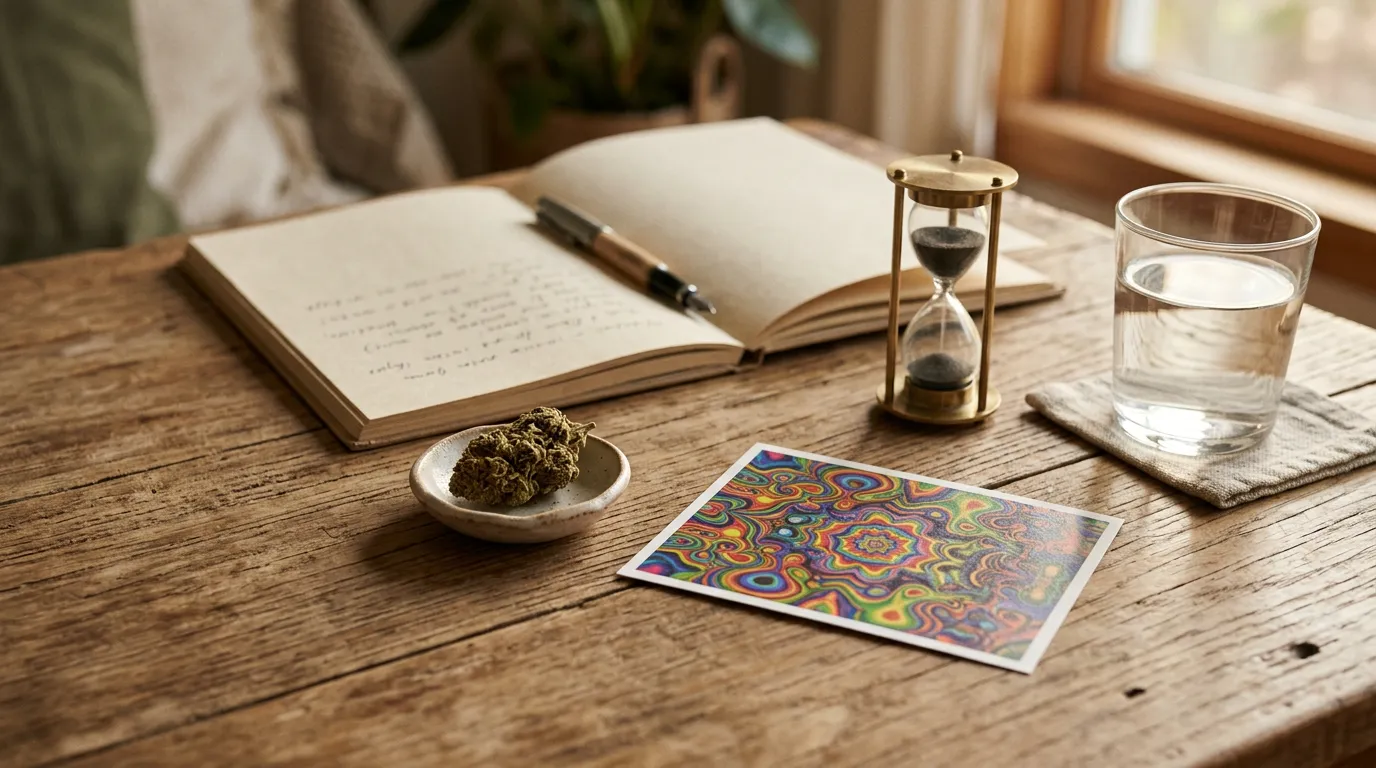
The question of whether and how to use cannabis around a psychedelic experience is one that experienced users approach with considerably more care than beginners. The casual assumption that cannabis is a soft, familiar substance that adds a pleasant layer to any psychedelic session has produced enough difficult experiences in enough people that the psychedelic community has developed a more nuanced set of practical guidelines around the combination — guidelines that are worth understanding before experimenting rather than after.
This article draws on the shared knowledge of experienced users, harm reduction communities and the available research to lay out what actually matters when it comes to cannabis and psychedelics: the timing questions, the dosage questions, and the specific ways in which cannabis can either support or seriously complicate a psychedelic experience depending on when and how it is used. For those who want to work with high-quality, low-THC or CBD-dominant cannabis around their sessions, https://high-society.uk/ offers a range of products from the accessible end of the spectrum worth considering.
Why Timing Is the Single Most Important Variable
Of all the variables that determine whether cannabis helps or hinders a psychedelic experience, timing is the one that experienced users consistently cite as most critical. The same dose of cannabis that smooths the come-up of a psilocybin session can send the peak into overwhelm if used an hour later, and this timing sensitivity is not widely understood by people who are new to combining the two.
The pharmacokinetics of the substances involved explain why timing matters so much. Psilocybin converts to psilocin in the body and reaches peak plasma concentration roughly 80 to 90 minutes after ingestion, with the most intense perceptual and cognitive effects occurring between 90 minutes and three hours after dosing. Cannabis smoked or vaped reaches peak effect within minutes and begins declining after 30 to 60 minutes. The interaction between these two curves produces very different results depending on where on the psilocybin curve the cannabis effect lands.
Cannabis on the Come-Up : Lower Risk, Potentially Useful
Using a small amount of cannabis in the first 30 to 45 minutes after taking psilocybin, before the effects have become intense, is the timing that experienced users most frequently report as useful. At this point in the psilocybin experience the effects are building but not yet at their most demanding, and a small amount of cannabis can reduce the nausea that some people experience during the come-up, ease physical tension and create a sense of ease that carries into the early stages of the peak.
The key word here is small. The dose that is appropriate at this timing is significantly lower than a standard recreational cannabis dose, and this is where many people make their first mistake with the combination. What feels like a modest amount of cannabis in an ordinary context can become overwhelming when it overlaps with the building intensity of a psychedelic experience.
The Peak : Why Most Experienced Users Avoid Cannabis Here
The recommendation that emerges most consistently from experienced users and harm reduction communities is to avoid cannabis at or near the peak of a psychedelic experience, particularly with psilocybin and LSD where the peak can be sustained and intense. The reasons are pharmacological and practical.
At peak intensity, the perceptual and cognitive load of the psychedelic experience is already at its highest. Adding the anxiety-amplifying potential of THC at this point, particularly with high-THC cannabis, significantly increases the risk of a difficult or overwhelming experience. The endocannabinoid system’s modulation of serotonergic signalling means that THC does not simply add its own effects on top of the psychedelic: it actively changes the neurochemical context in which the experience is unfolding, with results that are harder to predict and manage than either substance alone.
CBD-Dominant Cannabis as a Lower-Risk Alternative
For users who want the grounding or anti-nausea effects of cannabis without the anxiety-amplifying risk of THC, CBD-dominant cannabis represents a meaningfully lower-risk option at any point in the experience including the peak. CBD does not produce the anxiety or paranoia associated with high-THC cannabis and has documented anxiolytic properties that may actually support a difficult experience rather than intensify it.
This distinction between CBD-dominant and high-THC cannabis is the most practically important one for anyone considering using cannabis around a psychedelic session. The hemp market now offers genuinely CBD-dominant flowers with minimal THC that provide the physical effects of cannabis without the psychoactive risk profile of high-THC strains.
The Come-Down : Where Cannabis Is Most Consistently Useful
The phase of the psychedelic experience where experienced users most consistently find cannabis useful is the come-down, the period two to four hours after the peak when the most intense effects are subsiding but the body and mind are still processing what has happened. At this point in the experience, the risk of anxiety amplification is lower, the intensity of the perceptual effects has decreased significantly, and cannabis can support the transition back to baseline in several practical ways.
Many users find that a moderate amount of cannabis during the come-down reduces the restlessness and physical discomfort that can accompany the long tail of a psilocybin or LSD experience. It can also support reflection and emotional processing during the integration phase, helping to anchor insights from the experience in a more accessible mental state before full sobriety returns.